

Although the automatic exposure is a standard function which is equipped on almost all of the camera,
it is possible that the result is not as photographer’s satisfaction
depending on the condition such as the subject and the background.
Then this time, we tried to confirm what kinds of case would cause the result
that wasn’t just as a photographer wanted when the camera was set to “the program auto”.
At first, we photographed a white subject on a white background.
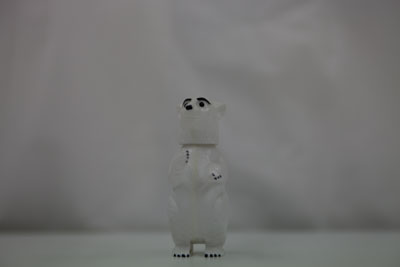
Because at first the photograph was dark and underexposure, by doing the exposure compensation to +2,
we succeeded in taking a picture with the appropriate brightness.
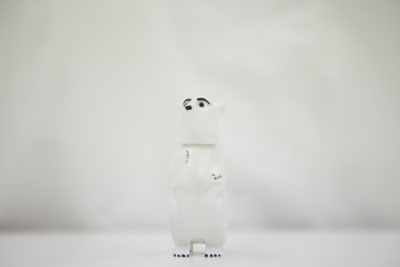
[photographing with the exposure compensation +2]
Next, We photographed a white subject on a black background.
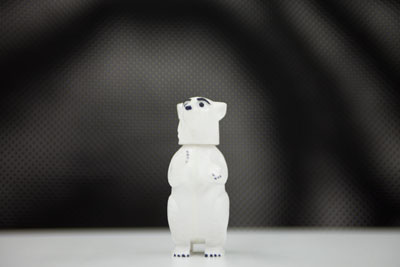
This time it has the good brightness without any exposure compensation.
And tried to photograph a black subject at the black background.

As the photo became too bright and over exposure,
we changed the exposure compensation to -2,
so that it turned out to be the proper brightness.

[photographing with exposure compensation -2]
At the end, we photographed a black subject at a white background
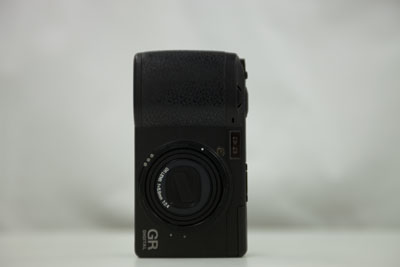
Without any exposure compensations, we got the good degree of brightness.
It seems like that the automatic exposure function would change the exposure
depending on the proportion of the overall color (brightness).
To photograph when it was whitish as a whole, arrange the auto exposure to be plus,
and when it was blackish, set it to be minus. In this way, we could obtain better results in each case.
However, as it depends on materials to shoot, it would be better to try checking the monitor after taking them.
Also, as there is a tendency that lighter photographs are preferred as stock photo,
let’s try to photograph making sure to take lighter ones.